
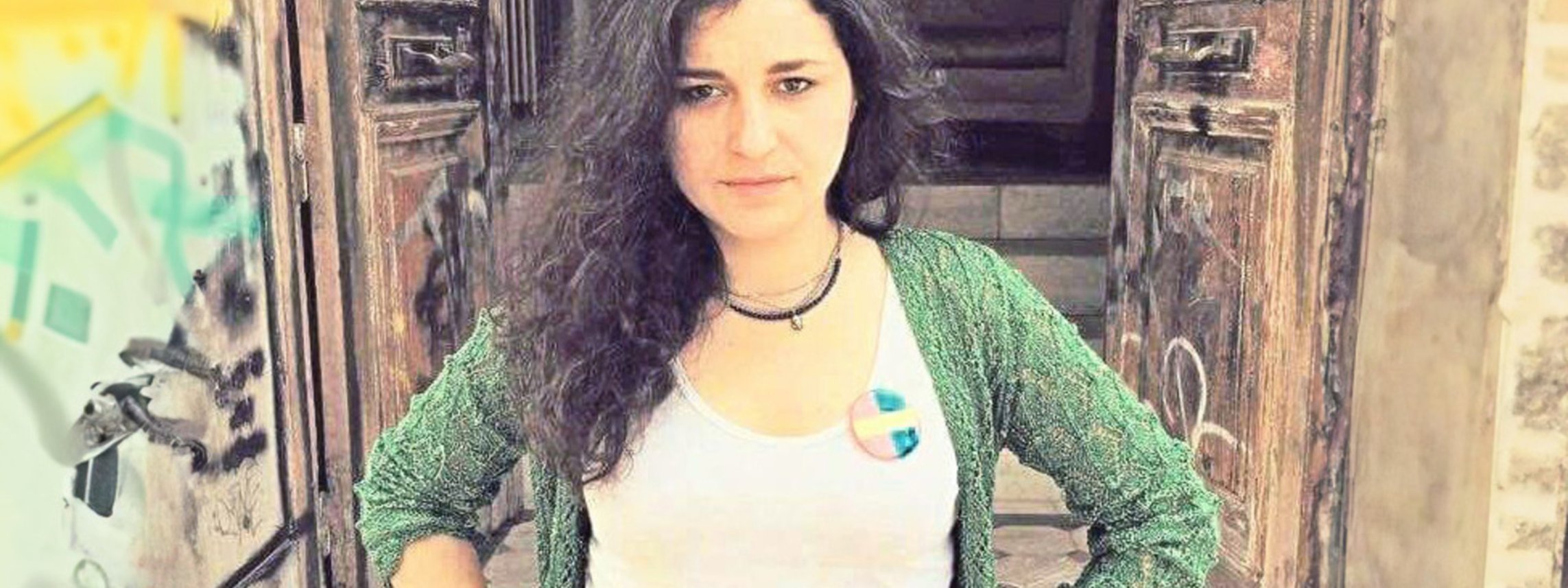
60 Years Robert Bosch Stiftung: An alumni’s story about getting from personal growth to collective change in Greece’s cultural sector
Natassa Durida received support from the Robert Bosch Stiftung at a crucial point in her life. The trust, acceptance, safety, and new contacts in and outside of Greece encouraged her to co-found Culture for Change – the first Greek organization representing over 70 professionals from diverse backgrounds, including cultural administrators, artists, lawyers, and urban planners. It aims to support its members by providing structures, practices, and educational opportunities to strengthen the cultural sector and civil society in Greece and globally.
The association offers consulting, legal support, networking, and competence development workshops; promotes social impact through reports, presentations, surveys, and community programs, and advocates for systemic change by supporting sociocultural innovation through partnerships and community-centered funding models.
The vision is to contribute to socio-cultural innovation in Greece by improving practices and tools to meet societal needs. The mission is to create opportunities for member cooperation and development, interconnect their work with communities, and highlight socio-cultural innovation. The association's values include transparency, participation, sustainability, and social impact.
On the occasion of the 60th anniversary of the Robert Bosch Stiftung, Natassa reflects on her journey and how the initial support helped her find and follow her personal path.
At what stage of your life were you when you received your grant from the Robert Bosch Stiftung?
My background is structural engineering and I mastered in restoration of monuments. I worked in that field, but I never really felt that it was in line with my personality. It just wasn't me. I had some other ideas, but I couldn't realize them. Then came the open call for "START – Create Cultural Change" in 2015. All they wanted was a degree and a creative idea.
Writing down my idea was already a start for me as it is still the same idea and vision that I'm working on today. It became my profession. The program turned out to be exactly the opportunity I needed, as I got in touch with many people who became important to me.
How did the grant affect your future path?
It was like a turnaround that I had been trying to do for years, but I never knew how. It just came naturally when I wrote down my project outline during the fellowship. After that, I had already dreamed, I had already visualized – and so I could not go back to structural engineering. Instead. I started this project. The feedback was amazing, so I continued for the next 3 years.
It was the right idea at the right time and things just happened. We got a lot of recognition and made an impact because the society in Athens at that time favored the idea of a community-led social-cultural center. Now it's been 9 years. And I am still myself professionally – I am in a job where I can bring 100% of my personality without feeling exposed or endangered.
Later, the participants of the START program were given the opportunity in cooperation with iac Berlin to create a new network in Greece to support each other and continue such projects. That must have been in 2018 and it was another magical moment. There were already several projects through START – like mine – and therefore there was already some recognition and pride that we can use our professions creatively in Greece, which was something we didn't have before.
It is very common for Greek creatives to only refer to international networks. We, on the other hand, focus on local professionals. I think that was the moment when we really started to change things on a deeper, more cultural level. What's happening today with Culture for Change feels like a ripple effect: the stone being thrown into the water was the proposal to initiate the network and our impact now is causing the ripples, bringing change in the local sociocultural scene.
What kind of “change” is Culture for Change working towards?
For me, to create change, you need a sense of safety. A safe bubble you can enter, find people like you, have the comfort of not being alone. Where you can decompress and share your experiences and be inspired. You need a place where you can develop and test things and then go out into society and continue. That is what changes things for me as a practitioner.
If you talk to other members of Culture for Change, you will see different kinds of change. But it's about dialogue in a more feminine way, in the sense that you're looking for consensus. That did not exist in Greece. Usually, it's a fight between the state and civil society. That makes people bitter. That's why we start with a security element.
With Culture for Change, a voice of the actors in the field has been created – almost like a union – that now supports its members in their own careers and encourages the creation of new cultural enterprises.
Is there an experience from the grant / program that you will never forget?
Participating in the START program and the strong sense of togetherness had a great impact on me. It took me out of the pressure cooker that Greece was at that time. I was able to open up, be myself, experience a different kind of education system where you are treated as an adult whose creative ideas are of value. The experience of 1.5 months was what I needed to change my professional approach to what it is today.
What program did you participate in?
START – Create Cultural Change
Picture © Natassa Durida
More of these personal impact stories will follow in the coming weeks - showing how the initial support of the Robert Bosch Stiftung helped someone on their future path. Stay tuned!
For more inspiration around the anniversary, keep an eye out for #boschstiftung60 on LinkedIn or Instagram.