
60 years Robert Bosch Stiftung: From volunteer roots to a leading role in Germany’s civil society support in Ukraine
The values of trust and support are at the core of philanthropy. The momentum and impact they can generate are exemplified by MitOst e.V. Initially an experimental initiative aimed at fostering new connections and approaches, MitOst has grown into a crucial network and became a key player in supporting Ukraine’s civil society amid Russia’s invasion.
The journey began in 1996 when the Robert Bosch Stiftung invited the first two cohorts of their “Lektorenprogramm” to Stuttgart for a final gathering to reflect on their experiences. Inspired to give back and continue the program’s mission of fostering societal engagement through language and cultural exchange, they established MitOst e.V. with the foundation’s support.
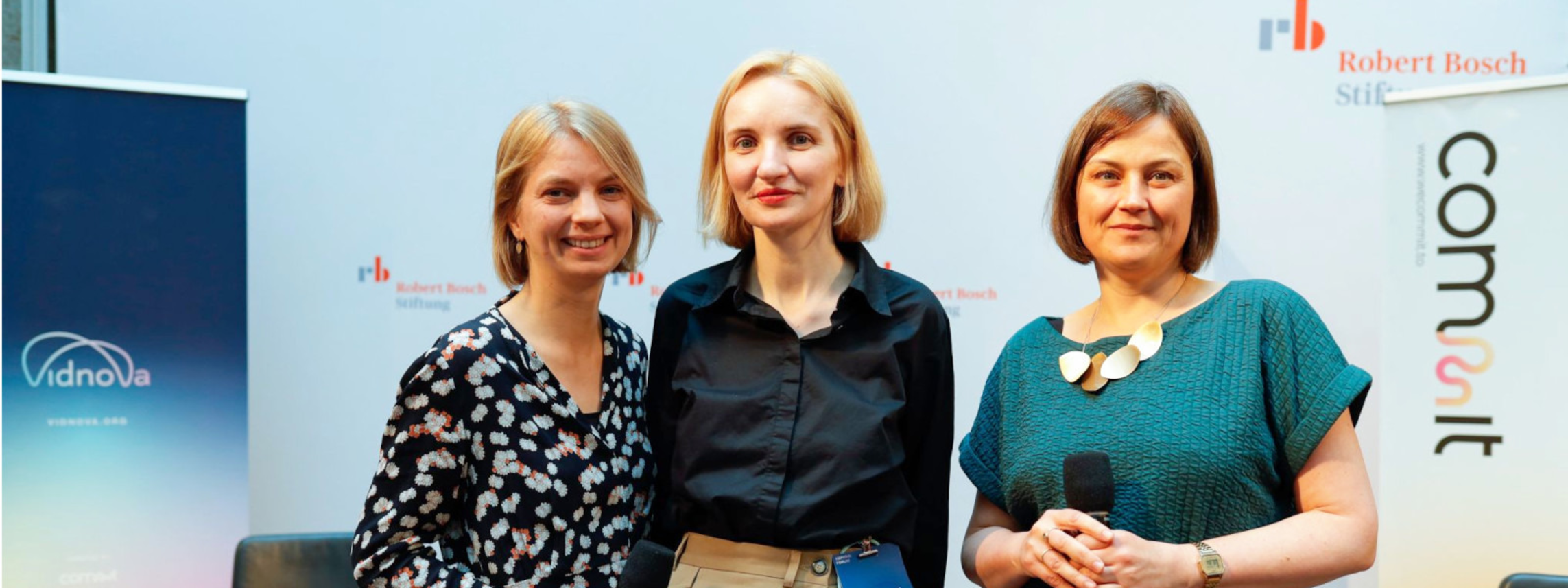
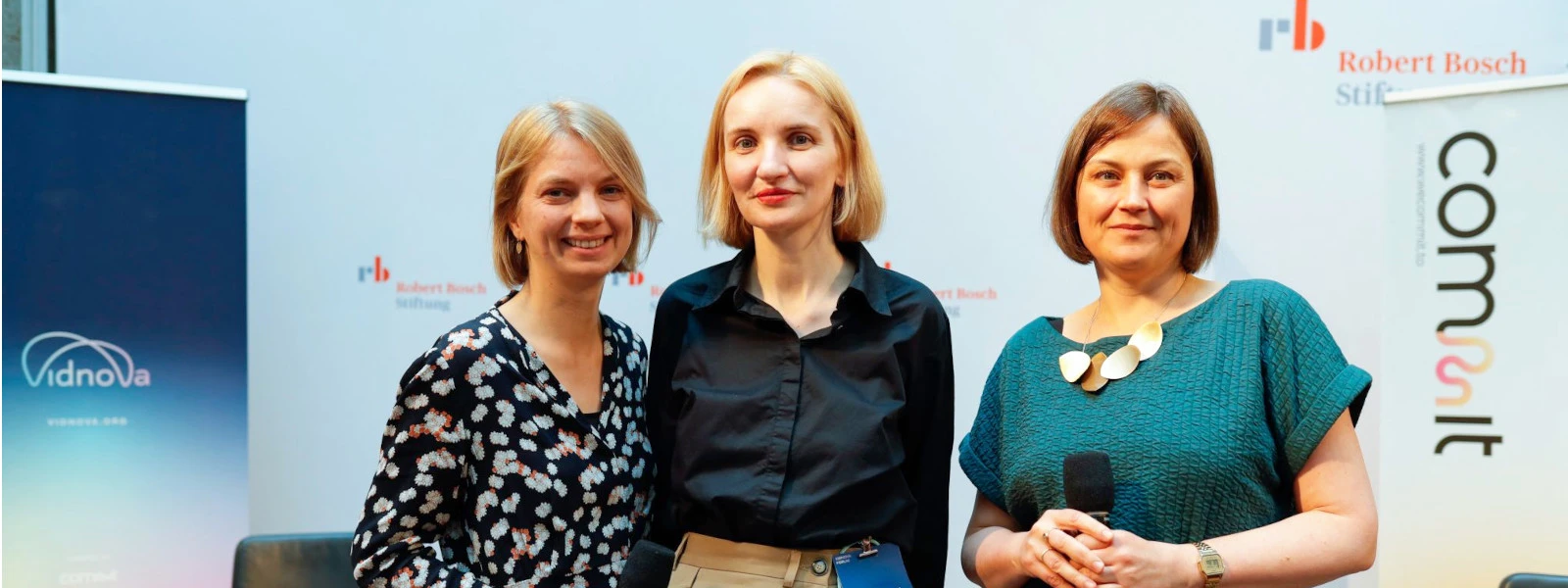
A key decision was the founding of the “Kreisau Seminar” in the village of Krzyżowa (German: Kreisau) in Poland, which later evolved into the Theodor-Heuss-Kolleg. It was here that Annegret Wulff, then a 22-year-old student and now CEO of MitOst, joined the initiative as a volunteer (right side of the picture).
On the occasion of the 60th anniversary of the Robert Bosch Stiftung, she reflects on the beginnings of MitOst and its current impact - and on how she benefited from the foundation's support without ever receiving direct support through a specific program.
You did not personally receive funding from the Robert Bosch Foundation, as you did not participate in one of their programs. Yet, MitOst's existence is closely tied to the Foundation’s support. How did you experience the early days?
I was 22 and studying Slavic Studies when I had the opportunity to volunteer at the Kreisau Seminars, which later became the Theodor-Heuss-Kolleg. I had a job to finance my studies, and the week in Kreisau cost me 25% of my monthly income. However, these week-long events in November were remarkable. The Foundation made the event possible and supported MitOst, which was entirely volunteer-driven for its first five years.
MitOst was founded as an alumni association by participants of the “Lektorenprogramm.” Still, it was an open association for anyone interested in cultural exchange and in the region. We developed innovative methods for political education, which was a novel approach in the mid-90s when political education was typically limited to explaining democratic institutions.
The countries that had newly emerged from behind the Iron Curtain needed a different approach. We believed that democracy could only thrive with strong citizens. But what does it mean to be a citizen? How can citizens take responsibility? Our focus was on these questions.
At the time, exchanges were mostly bilateral. Bringing together people from over 10 different Eastern European countries was both unusual and innovative.
At that time, no one could have imagined the role that MitOst would play in the last two years - since the beginning of the Russian war against Ukraine. The association became one of the central actors in civil society support from Germany. The support of a few interested students turned into an incredible lever.
It is an impressive example of what can emerge from an advance of trust. This trust creates space and energy for development. What we’ve achieved for and with Ukraine in the last two years was possible because of our extensive network, built over 20 years with programs like the Theodor-Heuss-Kolleg. We had established a network of trusting cooperation, which allowed us to act swiftly and effectively. This kind of support creates environments where unplanned, yet positive outcomes can emerge. At the Theodor-Heuss-Kolleg, we’ve always aimed to increase the number of people working together on social projects, which is only possible with prior trust. It’s not just about those with excellent grades, but also those with a genuine desire to make a difference.
Are there moments from your many years with MitOst that stand out in your memory? Perhaps a special "wow" moment?
The MitOst festivals are always special to me. People from diverse regions come together - in recent years from North Africa, Turkey, China, all of Europe, including Portugal and Spain, as well as our core areas in Eastern Europe and the post-Soviet region. The energy, hope, and determination to achieve something together despite different languages and backgrounds are incredible. This common spirit and sense of togetherness can also be felt when you meet other MitOst members in other groups, for example.
The Robert Bosch Foundation has supported many of our programs, leading to a network of active MitOst members. This has created lasting impact and solidarity, providing a sense of not being alone, even in difficult times. This feeling was especially important for people in crisis regions and was something I frequently experienced at the MitOst festivals. It’s hard to put into words, but it was always profoundly impressive.
As part of a growing European network, MitOst enables activities and programs which foster cultural exchange, active citizenship, social cohesion, and sustainable urban and rural development – beyond cultural, sectoral or linguistic borders. Through programs and projects, MitOst promotes collaboration, knowledge and skills exchange beyond borders. MitOst members create collaborative projects for local and cross-border impact. It has more than 1,500 members in about 50 countries.
More of these personal impact stories have been published in recent weeks - showing how the initial support of the Robert Bosch Stiftung helped someone on their future path.
For more inspiration around the anniversary, keep an eye out for #boschstiftung60 on LinkedIn or Instagram.